
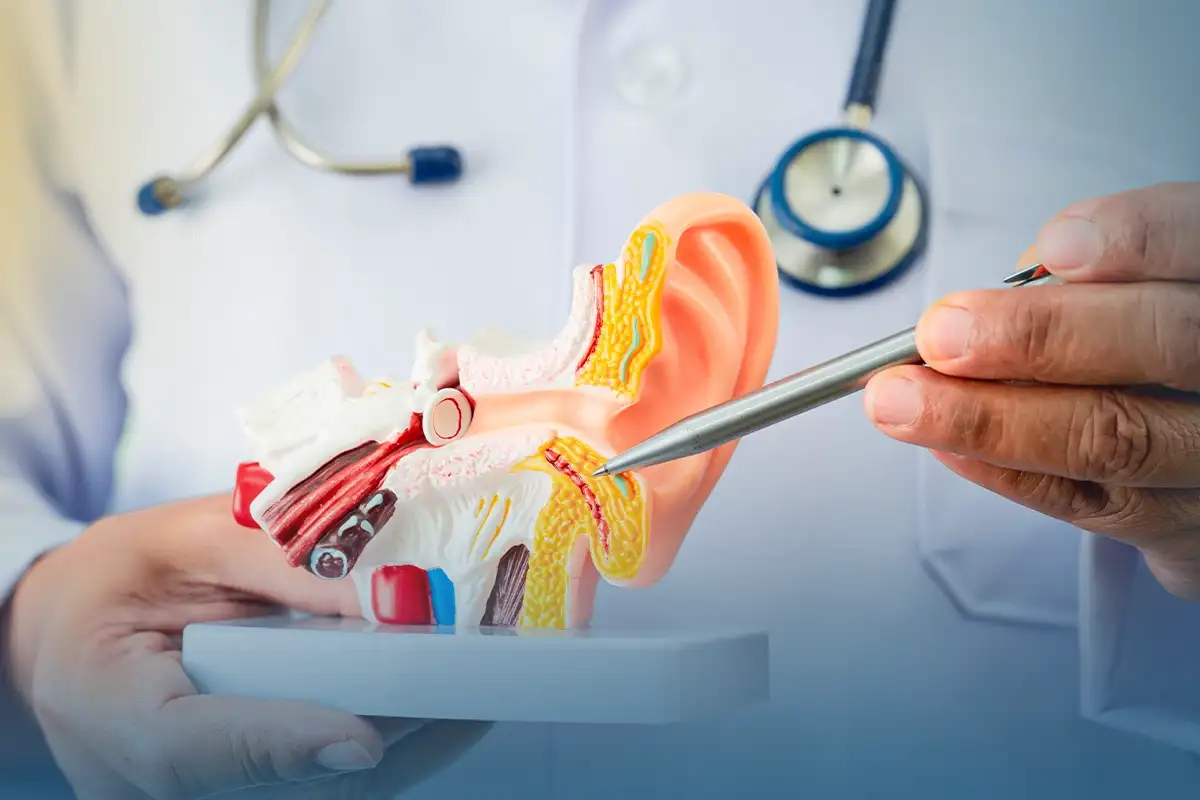
From bothersome breathing difficulties that ruin your day, to hearing loss that may isolate you from your social environment; and from recurrent tonsillitis that exhausts your children, to problems like hoarseness and night snoring—all are symptoms that should not be ignored. The ENT specialty is considered one of the fundamental branches within the integrated system of medical specialties and mental health , covering all precise therapeutic fields. Searching for a specialized Ear, Nose, and Throat doctor is no longer just a routine medical procedure; it is a decisive step toward restoring your quality of life, improving your focus, and ensuring a quiet, deep sleep.
In this comprehensive medical guide, we take you on a detailed tour to get to know everything regarding the ear, nose, and throat specialty in modern medical centers, and what are the latest therapeutic and surgical technologies available for the year 2026, and how to make the correct decision in choosing the most suitable doctor for your condition to guarantee reaching complete recovery.
What Does the Ear, Nose, and Throat Specialty Treat Exactly?
The ear, nose, and throat specialty (medically known as ENT or head and neck surgery) is a precise and comprehensive specialty covering the diagnosis and treatment of diseases related to three main and interconnected axes in the human body:
First: Nose and Paranasal Sinuses Conditions (Airway)
Proper breathing is the basis of life and activity. The doctors of this specialty treat precisely:
- Chronic nasal blockage and continuous breathing difficulty.
- Deviation of the nasal septum which causes headache and weak air entry.
- Chronic sinusitis and mucous membrane infections.
- Seasonal and chronic nasal allergy that is accompanied by coughing fits.
- Adenoids and nasal polyps (benign tumors that block the airway and weaken the sense of smell).
- Recurrent nose bleeding, and the loss of the senses of smell and taste.
Second: Ear Conditions and Hearing and Balance Problems
The ear is not only for hearing, but rather it is the main center for body balance. The treatment includes:
- Hearing impairment in its different degrees and causes (whether it was neurological or conductive).
- Chronic middle ear infection, and fluid accumulation behind the drum (especially in children).
- Continuous ear tinnitus that causes daytime and nighttime annoyance.
- Dizziness and benign paroxysmal positional vertigo (BPPV) and balance problems.
- Treating the ear drum hole surgically.
- Cochlear implant for severe deafness cases.
Third: Larynx, Throat Conditions, and Swallowing Problems
This part affects your ability to speak, eat food, and breathe during sleep:
- Recurrent and chronic tonsillitis and annoying tonsil stones.
- Adenoid hypertrophy in children which causes breathing from the mouth and a change in the jaw shape.
- Chronic voice hoarseness, and vocal cord nodules resulting from vocal strain.
- Loud snoring and sleep apnea.
- Various swallowing difficulties, and early detection of head and neck tumors.
According to the reports of the American Academy of Otolaryngology-Head and Neck Surgery (AAO-HNS),early examination of these symptoms reduces the need for complex surgical interventions by a percentage exceeding 60%.
When Must You Visit an Ear, Nose, and Throat Doctor Immediately?
Some symptoms do not bear waiting or experimenting with home painkillers. You must head to the ear, nose, and throat clinic emergency immediately in the following cases:
- Sudden loss in hearing (especially in one ear), and it is a medical emergency that requires immediate intervention with cortisone within 24 to 48 hours to save the nerve.
- Severe and sudden dizziness accompanied by continuous nausea and loss of the ability to stand.
- Acute and sudden tinnitus that had no previous medical history.
- Acute nasal bleeding that does not stop by direct pressure after 15 minutes.
- Complete and sudden blockage in the airway, or the presence of a solid mass in the neck that does not disappear within a few weeks.
The Most Prominent Modern Surgical Procedures in the Ear, Nose, and Throat Specialty
With technological development, most surgical interventions have become done with very precise endoscopes that reduce the recovery period. Here is the most prominent of what advanced ear, nose, and throat hospitals offer:
1. Septoplasty Surgery
It is performed to correct the deviation of the nasal septum which hinders natural breathing and causes snoring and chronic headache. What many do not know is that this operation can be combined with external rhinoplasty in one session, which improves the respiratory function and aesthetic appearance together. The recovery period takes a few days to return to desk work.
2. Endoscopic Sinus Surgery (FESS)
It is performed to remove the blockage and chronic infections in the paranasal sinuses without any external incisions in the face. This technique ends the suffering of chronic headache and continuous nasal congestion. The doctor decides the need for it after performing a three-dimensional CT scan (CBCT) that determines the blockage map precisely.
3. Removing Tonsils and Adenoids with Advanced Technologies
Traditional surgery is no longer the only option; modern technologies like radiofrequency vaporization or plasma (Coblation) have reduced bleeding and pain after the operation noticeably. The operation is performed upon the recurrence of infection for more than 4 times annually, or upon their hypertrophy to a degree that hinders the child's breathing and causes him suffocation during sleep.
4. Precise Diagnosis and Treatment of Sleep Apnea
This disease is considered among the most dangerous cases that the ear, nose, and throat doctor treats. It is represented in recurrent breathing cessation during sleep, which causes severe daytime fatigue and raises the risk of affliction with strokes and heart diseases. The treatment varies between using the assisted breathing device (CPAP), or jaw advancement devices, reaching up to microsurgery to widen the airway in the throat.
5. Cochlear Implant
A medical revolution in the ear, nose, and throat field restoring hope to those who lost severe sensorineural hearing. It consists of a precise electronic device planted in the inner ear to bypass the damaged cells and stimulate the auditory nerve directly. This procedure requires an integrated team of surgeons, audiologists, and speech specialists for programming and rehabilitation.
The Role of MedCoordinate in Coordinating Your Comprehensive Therapeutic Journey
Choosing the right doctor in a diverse specialty like Ear, Nose, and Throat (ENT) can be confusing. There are doctors who specialize only in delicate ear surgery, others in endoscopic sinus surgery, and others in head and neck tumors.
Here the role of MedCoordinate company stands out. We save you the trouble of search and experience, and we perform:
- Evaluating your initial medical condition and determining the precise sub-specialty that you need.
- Choosing the most suitable doctor and hospital from within a wide and accredited network with the highest international quality standards (JCI).
- Coordinating all medical examinations, audiograms, and surgical appointments to suit your time.
- Providing close follow-up after treatment or surgery to guarantee the progress of the recovery plan in complete safety.
Learn more about our services in Medical Tourism in Saudi Arabia and how we provide integrated medical trips for international patients.
Common Questions (FAQ)
Question: Is septoplasty surgery very painful?
Answer: The operation is performed under the effect of general anesthesia, so you will not feel any pain during the surgery absolutely. After waking up, you may feel some congestion and pressure (resembling a severe cold) and light annoyance that is easily controlled by regular painkillers prescribed by the treating ear, nose, and throat doctor.
Question: At what age is it considered safe to perform the tonsil removal operation for children?
Answer: The operation is considered safe from the age of 3 years and above upon the presence of clear and confirmed medical indications. The decision does not depend on age only, but it depends on the recurrence of purulent inflammation fits, and the extent of the tonsillar hypertrophy's effect on the quality of the child's breathing, his physical growth, and his night sleep.
Question: Does loud snoring always require surgical intervention?
Answer: No, not necessarily. Ear, nose, and throat doctors confirm that many cases of snoring respond to conservative solutions like weight loss, quitting smoking, treating mucous nasal allergy, or changing the sleep position. Surgical intervention is posed as a last option upon the presence of a clear anatomical obstacle proven by endoscopic examination or sleep study in the laboratory.
Question: Can gradual hearing impairment resulting from advancing in age be treated?
Answer: Sensorineural hearing impairment resulting from the damage of inner ear hairs (which accompanies advancing in age mostly) cannot be treated with medicines or drops. But, the ear, nose, and throat specialist will evaluate the condition precisely to prescribe the latest invisible digital medical hearing aids, or nominate the patient for cochlear implant in very advanced cases to restore the ability for effective communication.

 EN
EN  AR
AR